The year was 1994, seventeen years after the Community Reinvestment Act of 1977 was signed into law. “The Community Reinvestment Act is a United States federal law designed to encourage commercial banks and savings associations to help meet the needs of borrowers in all segments of their communities, including low- and moderate-income neighborhoods.”
I was in my second civilian job after I left the Marine Corps, working in the Human Resources Department of a large mid-Atlantic bank. I was well-versed in the data-driven process of Affirmative Action, monitoring the bank’s demographic profile compared to demographic availability in the area. If we were deficit in hiring minorities and/or women, managers set hiring goals. That was fun [she said sarcastically.]
The term Affirmative Action morphed into Diversity because research showed that there was a real business advantage – to the bottom line – to hire employees who mirrored the customer base. Dr. Roosevelt Thomas grabbed the attention of leaders with a 1990 HBR article From Affirmative Action to Affirming Diversity, where he introduced the concept of cultural inclusion, where employees work best when they are valued and contributing (my paraphrase), followed by several books quantifying the benefits of diversity in the workplace.
Back then, we all thought we were farther along in accepting differences than we actually were. Consulting firms made stealth videos of the mortgage application process and interview questions, showing the discriminatory questions for blacks. We showed them to executives to prove the point. Okay, maybe we’re not as far along as we thought.
That research did generate a significant movement within banking to align with the spirit of the Community Reinvestment Act and training departments geared up to make everyone sensitive to issues of diversity. Recruiters tried to convince hiring managers to think differently by sharing the research about how diversity helps the bottom line.
Everyone in Human Resources was getting on the now-called-Diversity bandwagon.
With that context laid, let me get back to 1994. I was asked to head the Diversity Initiative for the bank. “Best practice” in diversity was, without a doubt, IBM. At the time, they were providing an intensive week of diversity awareness training to everyone in a leadership role. My boss knew someone there and grabbed me a guest pass to one of the workshops, so off to NY I went.
The IBM leaders made every effort to include me fully, and the workshop brought out very touching and poignant personal stories. I shared my stories of being a female Marine in the 1970s with the group which gave me a chance to bond.
It was intense. I’d never experienced anything like that before, and I became convinced that whoever facilitates such a workshop has got to be very, very good and capable of handling the intensity and emotions.
On the last day, the facilitator had us sit in a circle without tables and asked us to share our thoughts about the week. I only remember one story.
A black man shared his advice to his son, who was learning to drive. He said that he told his son that if he were ever stopped by the police, he had to keep his hands on the wheel and ask permission to reach for whatever the police asked for.
I was appalled.
And then I went back to my home and my job. While the man’s comment stayed in my brain somewhere, I didn’t give it much further thought.
Interesting that CNN ran an article on June 2 about Magic Johnson still having “the talk” with his sons. I’m somewhat embarrassed that I let myself think things were better.
I started this post with “the year was 1994.” Did you get that? Almost three decades ago!
Do we really understand the significance of having thought everything was better for three decades only to find out that it hasn’t changed?
Where do we go from here?
I don’t know. We have become so divided in our expressed beliefs and we talk with others to convince them that we are right, not to try to understand their perspective.
On the television show Ozark, Laura Linney’s character blew up at an attorney representing her daughter’s request for emancipation. Later her husband made a comment about her being angry. She replied, “I’m not angry, I’m right.”
It seems as if so many of us are in the same place – right. A few weeks ago, I posted about having it both ways with a clever animal meme about how everyone has a different perspective.
If everyone has a different perspective, how can everyone be right?
We need to go deeper
I have recently talked with friends and family who think differently and asked questions about why they believe as they do. I want to understand why they think the way they do, because perhaps I may learn something which may influence my own perspective.
What I find is that most folks – friends and even family – don’t seem to want to go deeper. They are very happy to answer my questions about why they have a certain point of view, but when I make a statement or ask a question that doesn’t fit, the conversation seems to get stuck. Sometimes they revert to their original statement (or share an article that proves their point), or they change the subject, or they use the good ole “we can agree to disagree.”
What purpose do protests serve?
Many of us are expressing our right to protest the absolute travesty that happened in Minneapolis. In some ways, we are more aligned than ever about wanting change. I love the heartwarming expressions of horror at what happened, and the need to “do something.”
Protests have worked in the past to raise awareness and effect change. They have forced legislation that protects our citizens. We have a lot of legislation aimed at protecting others. I just filled out 20 pages of affidavits to volunteer at a women’s shelter. Each page was prompted by a legislative act aimed at making sure I was of good character.
Is legislation what we really need?
It is a start. But we need change. Real change.
Legislation mandates behavior and that is a good thing.
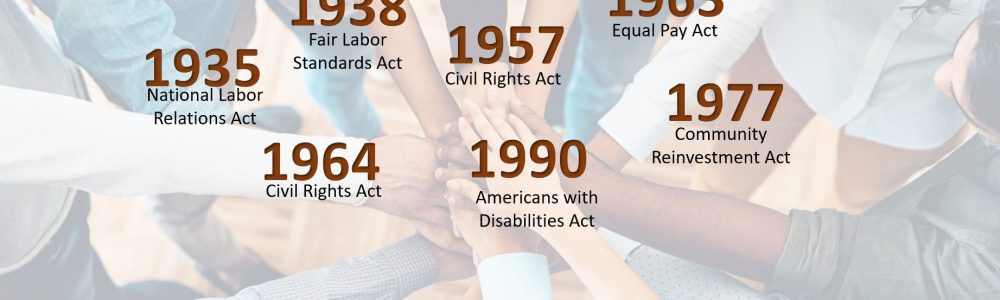
But the intent of the 1977 Community Reinvestment Act, forty-three years later, hasn’t effected real change. Nor has the “alphabet soup” of legislation on everything from equal pay to equal rights.
After my experiment asking friends and family about their positions, I wondered if perhaps the reason that the dialogue didn’t really go anywhere is because we really don’t want to change. We’re right, and therefore there is no need to change our perspective.
Or perhaps it is not about being right, but about being comfortable?
Are we as far apart as it seems?
My husband published an article yesterday about the “blue wall of silence” that historically but informally mandates police protecting their own. That is noble. Police face hardships most of us would run from.
But a good thing can be overdone, and he recent tragedy in Minneapolis is a travesty of justice. Too many powerful people looked the other way.
What if we looked at things from a deeper view. We post “black lives matter” or “blue lives matter,” but I’m pretty sure we all truly believe that all lives matter. I don’t think we are as far apart as our FaceBook memes would suggest.
It’s about respect
I received a few emails from friends who are, let’s just say, positioned. They contained lists of police officers killed during the same two weeks as the protests for George Floyd have been going on.
It feels as if they are telling me that, if I stand on the side of “black lives matter,” then I don’t care about police lives. That is not true for me, or probably for most people.
Talking is harder
Talking about all of this is hard, time-consuming and scary. Perhaps that’s why we don’t have the deeper conversations that might lead us to common ground. We just don’t want to find it.
Perhaps the lessons of COVID-19 are apropos here – we certainly are all in this together.
I don’t think we’re all that far apart in terms of what we want – lives of peace, freedom and prosperity.
Just think what we could do with that energy if it were redirected toward real change.
Let’s talk. And then let’s do something.
Are we willing to let down our own convictions just a little and perhaps see something new?
If you REALLY want to open your mind, read “White Fragility: Why It’s So Hard For White People to Talk About Racism” by Robin D’Angelo.
Photo credit: I made it to demonstrate how many acts we have complied with for so long without changing the spirit of equality in the country.




 ....@ the intersection of learning & performance